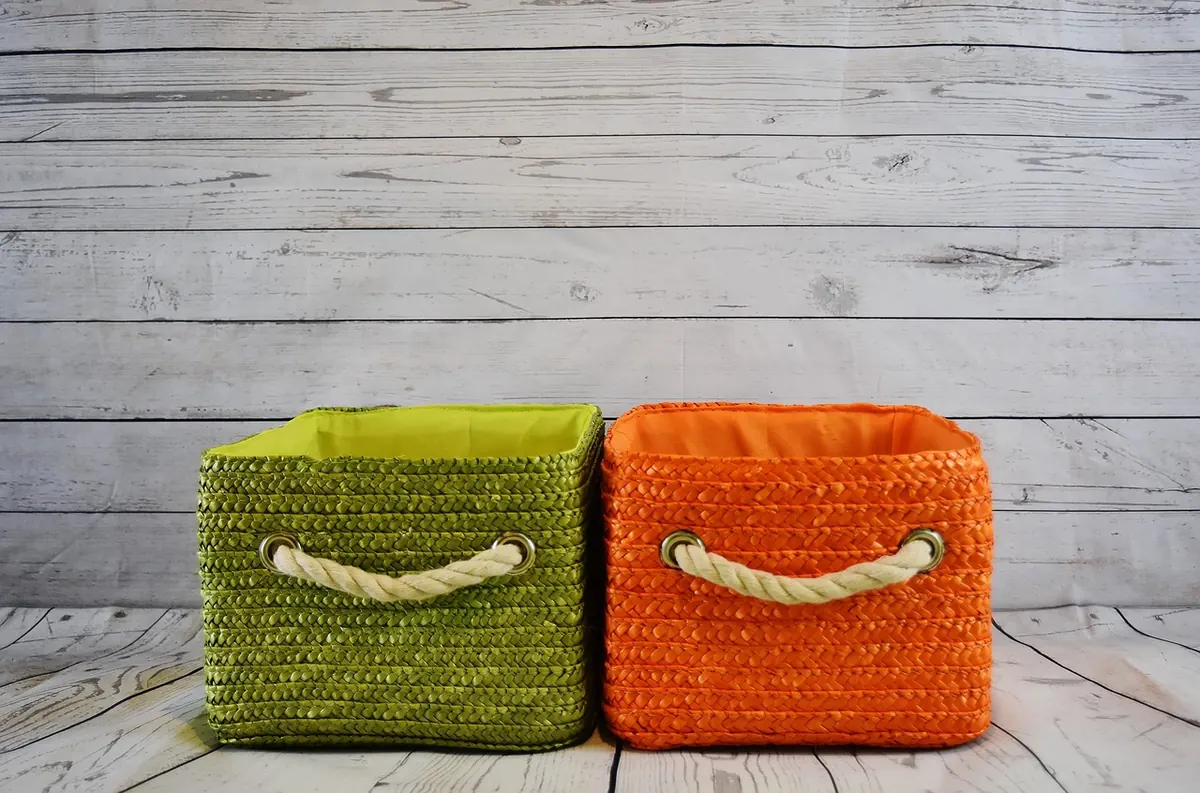
A hallway asks a lot of a small piece of furniture. It has to take wet shoes, school bags, a dog lead, the post, and still let you get through the front door with your arms full. Two pieces get suggested again and again for the job: the storage bench and the blanket box. They look similar in photographs, sit in similar spots and both hide clutter. In daily use they behave quite differently, and the right answer depends less on style than on the shape of your hall and how often you will genuinely sit down in it.
What each piece really is
A storage bench is built around a seat. The seat height usually lands somewhere between 45cm and 50cm, the length runs from about 90cm to 120cm, and the depth is typically 35cm to 45cm. Underneath that seat you get one of three things: open cubbies, pull-out baskets, or a lift-up lid over a single void. Some have shallow drawers instead. They are designed for halls, porches and boot rooms, which is why they are usually shallower than they look.
A blanket box is a lidded chest. Same sort of length, but deeper — often 45cm to 55cm — and built as one large compartment, sometimes on small feet or castors. Historically it lived at the end of a bed and held linen, blankets and out-of-season clothing. The difference between the two is not branding. It is a seat with storage underneath versus storage with a lid on top.
Capacity: what each one actually swallows
A bench with two or three open cubbies will take a pair of adult shoes per bay, plus a basket of hats and gloves. That is fine for everyday kit, but bulky items are awkward because the bays are short and divided.
A bench with a lift-up seat gives you one long void, though it is often shallower inside than the outside suggests — the seat frame, hinges and any shoe shelf eat into it. It suits flat, long things: folded reusable bags, spare trainers laid on their sides, a rucksack, a folded picnic blanket.
A blanket box wins on raw volume. No dividers, no seat frame, and extra depth means you can stand wellies upright, layer folded coats, or store bedding and sports kit. Two people's worth of winter boots will sit side by side without a fight. The trade-off is that small items migrate to the bottom and stay there. A box without a tray or a couple of baskets inside becomes a lucky dip within a month.
Footprint: the numbers that matter
Depth is where the two pieces part company in a narrow hall. A 38cm bench in a 1.1m-wide hallway leaves around 70cm of walkway, which is comfortable. Swap in a 50cm box and you are down to roughly 60cm — workable, but you will feel it every time you carry shopping through with the front door open.
Then think about lid clearance. A top-hinged lid needs room to swing, and if the box sits against the wall you will be leaning over it to reach the far side. Measure before you commit:
- Measure the wall you have in mind, skirting board to skirting board, and note radiators, sockets and light switches.
- Open the front door and any internal doors fully, then measure the clear gap that is left.
- Mark the footprint on the floor with masking tape and live with it for a week. It is the cheapest test you will ever do.
- Check the route in — porch width, the turn at the bottom of the stairs, the gap past the bannister. Measure the item's diagonal, not just its length.
- Think about decorating. Anything you cannot shift on your own will be a nuisance later.
Everyday usefulness: the hallway test
For the daily routine, the bench is hard to beat. You sit down to tie laces, stand up, shoes go underneath, bag goes on top. Open cubbies are the practical choice for a busy household because you never have to lift a lid with one hand while holding keys, a lead or a child in the other.
A blanket box asks for a small ritual every time: clear the top, lift the lid, hold it up, find what you need, close it again. Once a week that is nothing. Twice a day, every day, it starts to grate. If the box also doubles as a surface for post, keys and a tray, you will be moving that tray every single time.
Where the box pulls ahead is as a surface. A flat, uninterrupted top takes a lamp, a bowl, or a plant far better than a bench with cubby dividers. If your hallway is somewhere you pause rather than sit, that matters more than a seat.
Where a blanket box quietly wins
Choose the box when you need capacity rather than a perch, or when you want everything completely concealed — no shoes on show, no baskets to tidy. It works well at the end of a long, narrow hall where it does not interrupt the walking line, under a low windowsill, or beside the door as a surface with storage inside. In a bedroom, at the foot of a bed, it still does exactly the job it was designed for.
Six things to check before you buy
- Hinge quality. A lid stay or soft-close mechanism stops the lid dropping on fingers and prevents that hollow bang at 7am.
- Lid weight. If it is heavy, ask yourself who else in the house will be opening it, and whether they can manage it safely.
- Finger gap. Run your hand around the rim where the lid meets the box. Sharp edges and tight gaps are worth avoiding.
- Ventilation. Damp shoes sealed in a closed box trap moisture. Let wet footwear dry elsewhere first, or choose a bench with slatted or open storage.
- Construction. Solid pine and proper joints age well; thin panels and stapled corners do not. Feel the weight of the piece empty — a surprisingly light box usually means thin timber.
- Mobility. Felt pads, castors or a manageable weight make a real difference in a small hallway, especially if you rearrange for Christmas.
Making the call
Be honest about how you use the space. If someone in the house sits down to put shoes on most days, or if you want everyday items within easy reach without lifting a lid, take the storage bench. If you mostly need somewhere to put things you touch once a season, and you would rather keep the floor completely clear, take the blanket box. If both descriptions sound familiar, look for a bench with a lift-up seat and a couple of baskets inside — it is the closest thing to having both.
Then do the tape test. Mark out the footprint, walk past it for a week, and check the route in from the front door before you order. A hallway is one of the few places in a house where five centimetres of depth genuinely changes how a room feels, and it is far easier to measure twice than to live with the wrong box for the next ten years.
Photo: Alexas_Fotos / Pixabay